



Customer segmentation has become one of the most effective growth levers in modern eCommerce. As competition increases and acquisition costs rise, brands can no longer rely on generic messaging or broad offers. Instead, successful stores use customer segmentation in eCommerce to deliver relevant experiences that convert better, retain longer, and scale profitably.
To scale faster and personalize customer journeys, ecommerce marketing automation plays a critical role. It helps online stores automate campaigns, segment audiences, and deliver timely.
What Is Customer Segmentation in eCommerce?
Customer segmentation is the process of dividing your eCommerce audience into smaller, meaningful groups based on shared characteristics, behaviors, or needs. These segments help brands move away from a one-size-fits-all approach and instead deliver personalized marketing, product recommendations, and experiences that feel relevant to each shopper.
In ecommerce customer segmentation, data such as purchase history, browsing behavior, location, and customer value are analyzed to identify patterns. When used correctly, segmentation increases conversion rates, average order value, and long-term customer loyalty, without increasing ad spend.
The Importance of Customer Segmentation for Online Stores
The importance of customer segmentation lies in relevance. Modern shoppers expect brands to understand them. When every customer sees the same email, discount, or product offer, engagement drops and churn rises. Segmentation ensures your message reaches the right customer at the right time.
From welcome campaigns for first-time buyers to VIP offers for loyal customers, ecommerce segmentation allows brands to prioritize high-impact actions. It also improves ROI by reducing wasted marketing spend and focusing efforts on customers most likely to convert or repeat purchase.
Also Read: https://softpulseinfotech.com/blogs/custom-shopify-development-theme-app-solutions/
Key Types of Customer Segmentation Explained
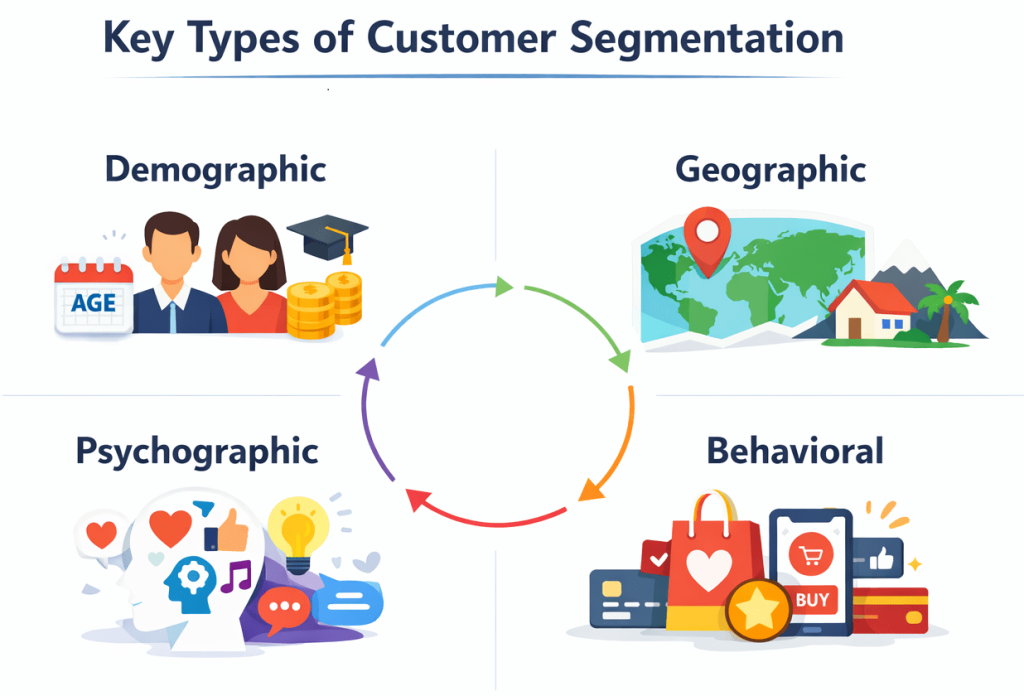
Understanding segmentation types helps you build a structured strategy instead of random audience splits. Below are the most widely used segmentation models in eCommerce.
1. Demographic Segmentation
Demographic segmentation groups customers based on age, gender, income, education, family size, or occupation. This type is useful for aligning pricing, product positioning, and messaging. For example, premium products often appeal more to higher-income segments.
2. Geographic Segmentation
Geographic segmentation divides customers by location, country, city, climate, or urban versus rural settings. It enables localized pricing, shipping rules, language targeting, and region-specific promotions, which significantly improve conversion rates and customer satisfaction.
3. Psychographic Segmentation
Psychographic segmentation focuses on lifestyle, values, interests, attitudes, and personality traits. This approach helps brands craft emotional messaging and brand stories that resonate deeply with customers who share similar motivations and preferences.
4. Behavioral Segmentation
Behavioral segmentation is the most powerful model in eCommerce. It groups users based on purchase history, frequency, browsing behavior, cart abandonment, loyalty, and engagement. This data-driven approach fuels personalization, upselling, and retention strategies.
Customer Segmentation Types at a Glance
| Segmentation Type | Based On | Common Use Cases |
|---|---|---|
| Demographic | Age, income, gender | Pricing, product positioning |
| Geographic | Location, region | Local offers, shipping logic |
| Psychographic | Interests, values | Brand storytelling, loyalty |
| Behavioral | Purchases, actions | Retention, upsells, automation |
Why Businesses Use Customer Segmentation
Customer segmentation analysis helps brands make smarter decisions across marketing, sales, and product strategy. Below are the primary reasons businesses rely on segmentation to drive growth.
Better Targeting
Segmentation allows marketers to send tailored messages instead of generic campaigns. Targeted emails, ads, and offers consistently outperform broad outreach in terms of open rates, click-through rates, and conversions.
Increased ROI
By focusing spending on high-intent or high-value segments, brands reduce wasted ad budgets. Segmentation ensures promotions reach customers who are more likely to respond, improving overall marketing efficiency.
Enhanced Personalization
Personalized experiences build trust. Showing relevant products, content, and offers makes customers feel understood, which increases engagement and repeat purchases over time.
Smarter Product Development
Segmentation reveals what different customer groups actually want. Brands can use these insights to refine product features, launch new collections, or discontinue underperforming items.
Improved Customer Retention
Retention-focused segments, such as loyal customers or churn-risk users, enable proactive engagement. This keeps customers coming back and increases lifetime value without increasing acquisition costs.
How Customer Segmentation Works in Practice
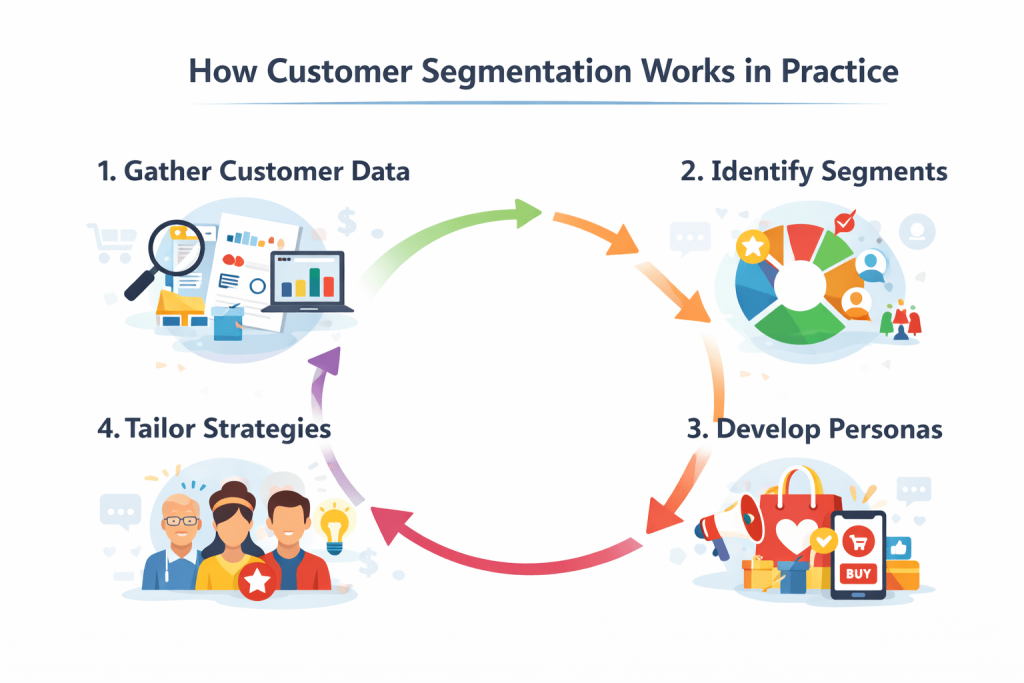
A successful customer segmentation analysis follows a structured process rather than guesswork. Here’s how eCommerce brands typically implement it.
Step 1: Gather Customer Data
Data is collected from multiple touchpoints such as website analytics, CRM systems, order history, email tools, and customer support interactions. The richer the data, the more accurate your segments become.
Step 2: Identify Meaningful Segments
Using patterns in data, customers are grouped based on shared traits or behaviors. This could include repeat buyers, discount-driven shoppers, high spenders, or inactive users.
Step 3: Develop Customer Personas
Personas bring segments to life by adding context. Each persona includes motivations, pain points, goals, and buying triggers, helping teams align messaging and strategies more effectively.
Step 4: Tailor Marketing and Sales Strategies
Once segments are defined, brands create customized campaigns, product recommendations, pricing strategies, and retention flows that directly address each group’s needs.
Automated Customer Segmentation for eCommerce
Manual segmentation becomes difficult as stores scale. This is where automated customer segmentation for eCommerce adds real value. Automation tools continuously update segments based on real-time customer behavior.
Automated segmentation enables triggered emails, dynamic product recommendations, loyalty rewards, and personalized discounts without manual intervention. It ensures customers always receive relevant communication, even as their behavior changes over time.
Shopify Customer Segmentation
Shopify customer segmentation is especially effective because of its deep integration with store data. Shopify allows merchants to segment customers using filters such as purchase frequency, order value, product history, and location.
By combining Shopify’s native segmentation with automation tools, merchants can build advanced flows for onboarding, win-back campaigns, VIP rewards, and cross-selling, without complex technical setups.
Businesses working with experienced Shopify partners like Softpulse Infotech a Shopify Plus Agency can unlock even more value by implementing custom segmentation logic, advanced analytics, and scalable personalization strategies.
Common Mistakes to Avoid in Customer Segmentation
Many businesses fail to see results because of poor execution. Avoid these common pitfalls:
- Creating too many micro-segments that are hard to manage
- Using outdated or incomplete customer data
- Focusing only on demographics and ignoring behavior
- Not testing or optimizing segment-based campaigns
Effective segmentation is iterative. Regular analysis and optimization are essential for long-term success.
Why Customer Segmentation Builds Long-Term Trust
From a Google EEAT perspective, segmentation improves experience, expertise, authority, and trust. Customers receive relevant content instead of spammy promotions, which strengthens brand credibility and loyalty.
When segmentation is done transparently and responsibly, it enhances user experience while respecting data privacy and consent, critical factors for long-term brand trust.
Final Thoughts
Customer segmentation is no longer optional for eCommerce brands, it is a growth necessity. When implemented correctly, segmentation improves relevance, efficiency, and customer loyalty without increasing marketing costs.
By combining customer segmentation analysis, automated customer segmentation for eCommerce, and Shopify customer segmentation, brands can unlock scalable growth. Partnering with experts like Softpulse Infotech ensures your segmentation strategy is technically sound, data-driven, and built for long-term success.
If your goal is to increase eCommerce sales sustainably, segmentation is the foundation that makes every marketing and sales effort work harder.
Frequently Asked Questions
1. What are the 4 types of customer segmentation?
The four main types of customer segmentation are demographic, geographic, psychographic, and behavioral.
2. What are the 4 customer segments?
In eCommerce, the four commonly used customer segments are new customers, returning customers, loyal/high-value customers, and inactive or at-risk customers.
3. What are the 5 key customer segments?
The five key customer segments often include new customers, repeat buyers, high-value (VIP) customers, discount-driven customers, and inactive or churn-risk customers.
4. What is an example of customer segmentation?
A simple example of customer segmentation is dividing shoppers into first-time buyers and repeat customers. First-time buyers may receive welcome offers and education, while repeat customers receive personalized product recommendations or loyalty rewards based on past purchases.