


If you’ve worked with websites, apps, or digital content, you’ve probably heard the term headless CMS. It’s one of those buzzwords that keeps showing up because brands want faster sites, more freedom with design, and better ways to publish content everywhere.
Softpulse Infotech works with Shopify brands every day, and we see a clear shift: store owners want flexible content management without being tied to one frontend. That’s where a headless content management system changes everything.
What Is a Headless CMS?
A headless CMS is a content management system where the backend (content storage and management) is separated from the frontend (website or app design).
Instead of forcing content to live inside one specific theme or template, a headless CMS sends content through APIs to any device or platform. You can publish the same content on:
- A Shopify storefront
- A mobile app
- A smart device
- A microsite
- A kiosk or digital sign
This is why many brands call it the future of content management systems. Check the content management systems examples.
How a Headless CMS Works
A modern headless setup is usually made of three simple parts:
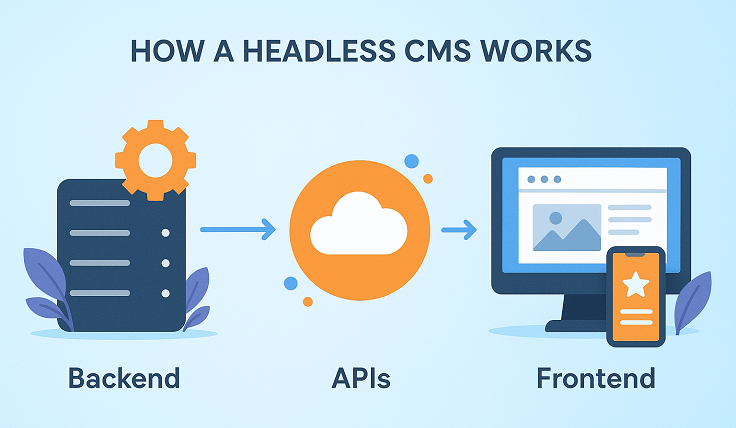
Backend (Content Layer)
This is where teams create, edit, and organize content. It works like a clean database without any design limitations.
APIs
The CMS delivers content through APIs (usually REST or GraphQL). Think of APIs as the “pipes” that carry data to any platform.
Frontend
Developers can build the frontend using any technology, such as Next.js, React, Vue, Hydrogen for Shopify, or a mobile framework. You choose the design and tech stack you want, not what the CMS restricts you to.
Why Brands Are Switching to Headless CMS
Flexibility
You can design any experience without following rigid theme structures. For Shopify stores, this means faster pages and custom layouts that boost conversions.
Omnichannel Delivery
Post once, publish everywhere. A headless content management system lets your content show up across devices without rewriting or duplicating work.
Scalability
Great for brands growing fast. When traffic spikes during BFCM, a headless CMS handles the load smoothly.
Faster Deployment
Developers work on the frontend while content teams work on the backend. You ship updates faster without breaking anything.
Future-Proofing
New device? New channel? The CMS stays the same, you connect it to more platforms using APIs.
Best Use Cases for a Headless CMS
- Shopify stores want lightning-fast storefronts
- Multi-language or multi-country stores
- Content-heavy brands (blogs, videos, resource hubs)
- Mobile apps that share data with your site
- Businesses managing multiple websites from one backend
Softpulse Infotech often recommends headless to stores with advanced UX or high growth targets.
Also Read: https://softpulseinfotech.com/blogs/what-is-shopify-development-guide/
Pros and Cons of a Headless CMS
A headless CMS gives brands full control over design, performance, and content delivery across multiple platforms. It’s great for teams wanting freedom and speed. Still, it comes with a few drawbacks, like needing developers, handling separate hosting, and managing more tools. It’s powerful, but it works best when you have a stable workflow and a tech-friendly team.
| Pros | Cons |
|---|---|
| Complete design freedom | Requires developer support |
| Faster performance | Slightly higher setup cost |
| Publish content on any device | Needs separate hosting for the frontend |
| Easy integration with APIs | More tools to manage compared to traditional CMS |
| Scales as your store grows | Learning curve for non-technical teams |
Best Headless CMS Platforms to Explore
Several platforms stand out for their reliability, flexibility, and developer experience. Tools like Contentful, Sanity, Strapi, Prismic, and Shopify’s Hydrogen stack give brands API-first content delivery, clean interfaces, and strong performance. Each one fits different needs, whether you want a powerful enterprise CMS or a lightweight and customizable option for fast-growing ecommerce stores.
- Contentful
- Sanity
- Strapi
- Shopify Hydrogen + CMS tools
- Ghost (for blogging)
- Prismic
Each one offers flexibility, API-first workflows, and better control over content.
Why Headless CMS Works Well With Shopify
Shopify stores using headless setups gain faster speed, custom UX, and more control over page layouts than the native theme system. Brands can build landing pages, interactive sections, and unique storefronts without limitations. It’s especially helpful for scaling stores that need high performance, multiple languages, or complex content workflows. A headless CMS brings Shopify’s backend and a modern frontend together perfectly. Softpulse Infotech works heavily on Shopify Plus, and we’ve seen a clear trend:
Brands want:
- Faster storefronts
- More landing pages
- Custom PDP/PLP layouts
- Storytelling pages
- A/B testing freedom
Shopify’s native CMS is good, but a headless content management system gives brands more creativity and performance, especially for those aiming to scale.
Who Should Use a Headless CMS?
You’ll benefit most if your business needs:
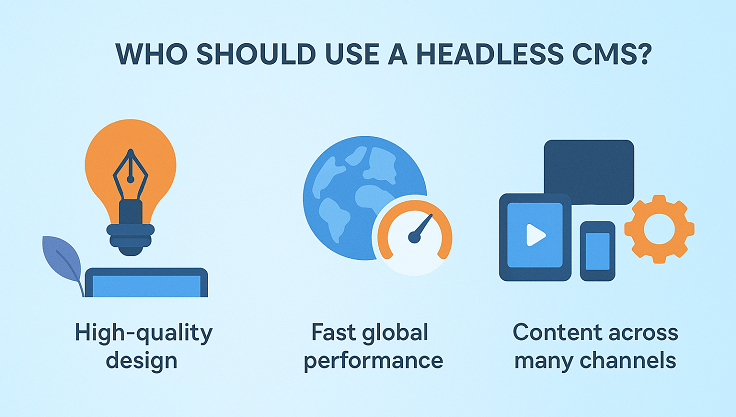
- High-quality design
- A unique frontend
- Fast global performance
- Content across many channels
- Flexibility without theme limits
For small stores or early-stage brands, a traditional CMS is fine. For growing brands, a headless CMS becomes a strong advantage.
Final Thoughts
A headless CMS gives brands the freedom to build faster, design better, and reuse content everywhere. With the right setup and the right development partner, you can create experiences that feel modern, fast, and consistent across every touchpoint. If you’re considering headless for your Shopify store development, Softpulse Infotech can help you plan and build the ideal setup.
Frequently Asked Questions
1. What is a headless CMS?
A headless CMS is a content management system where the backend and frontend are separated. Content is stored in the backend and delivered through APIs to any device, website, app, or digital platform, giving brands more freedom and speed compared to traditional CMS setups.
2. What does headless CRM mean?
Headless CRM refers to a CRM system that works without a fixed frontend interface. It connects through APIs so businesses can plug customer data into any platform or custom frontend. While similar in concept, it’s different from a headless CMS because it focuses on customer data instead of content.
3. What is the difference between a headless CMS and a backend?
A backend is the full server-side structure where data, logic, and storage happen. A headless CMS is a specialized backend designed for managing and delivering content through APIs. All headless CMS platforms have a backend, but not every backend functions as a CMS.
4. Why is headless CMS called headless?
The term “headless” comes from removing the “head,” which represents the frontend. Since the CMS doesn’t control how content looks on the website or app, it’s considered headless. The frontend is built separately using any technology the brand prefers.
5. Is headless CMS bad for SEO?
A headless CMS is not bad for SEO when set up properly. Using frameworks like Next.js, Remix, or Hydrogen improves page speed, routing, and content delivery, which can boost SEO. You need a correct SSR or SSG setup, metadata handling, sitemaps, and structured content workflows.
6. What is the most popular headless CMS?
Some of the most popular headless CMS platforms today include Contentful, Sanity, Strapi, Prismic, and Hygraph. The best headless CMS depends on your needs. Contentful for enterprise, Sanity for flexibility, Strapi for open-source setups, and Prismic for fast frontend builds.